
Treatment of Anxiety Disorders and Stress
>> Anxiety Disorder>>Mental Wellness>> Treatment of Anxiety Disorders and Stress
Treatment of Anxiety Disorders and Stress
Stress and anxiety are often spoken about as if they are the same thing, yet they behave differently in the body and require different clinical responses. Stress is usually tied to a demand, deadline, conflict, illness, or major life change. Anxiety can begin with stress, but it often outlasts the trigger, spreads into multiple settings, and starts shaping sleep, focus, digestion, appetite, and daily decision-making.
In 2026, the clinical picture Health Forever is especially mixed. Many patients present with chronic work strain, poor sleep, caffeine overuse, health fears, and intermittent panic symptoms. Some are dealing with generalized anxiety disorder, others with performance anxiety, social anxiety, or panic disorder, and many have overlapping depressive symptoms. The most useful approach is not to ask whether stress is “real” or “just anxiety,” but to identify what is happening in the nervous system, how long it has been going on, and how much it is interfering with life.
2026 Clinical Update: Stress, Anxiety, and What Changed
The basic biology has not changed, but the way clinicians assess and manage anxiety has become more structured. Measurement-based care is used more often, especially with tools like the GAD-7, PHQ-9, and brief sleep screens. Telehealth, app-supported CBT homework, and stepped-care models are now normal in many practices. Wearable sleep data and activity trends can also help reveal patterns of autonomic arousal that patients may not notice in the moments. Stress activates the sympathetic nervous system and the hypothalamic-pituitary-adrenal axis. Heart rate rises, breathing changes, muscles tighten, and the brain shifts attention toward threat detection. That response is useful when it is short-lived. The problem starts when the alarm stays on.
HPA-axis activation and allostatic load
When stress is repeated, cortisol signaling and autonomic arousal can stay elevated for long periods. Clinicians often describe the cumulative wear on the body as allostatic load. Patients may not say, “I feel anxious,” but they may report.
Stress becomes more concerning when the reaction is disproportionate to the trigger, hard to control, present across settings, or paired with avoidance. A common pattern in practice is the patient who says they are “just under a lot of pressure,” yet they have stopped driving on highways, can’t sleep more than four hours, and rehearse worst-case scenarios all day.
Stress vs Anxiety Disorder: A Practical Comparison
Generalized anxiety disorder is defined by persistent, hard-to-control worry across multiple life areas. The content changes, but the pattern stays the same. Patients may move from finances to health to family to work in a single day. Physical symptoms are common and often lead people first to primary care, cardiology, or gastroenterology.
Panic disorder centers on recurrent panic attacks and the fear of having another one. The attack itself can feel like a heart problem, a neurologic problem, or “something is seriously wrong.” Shortness of breath, chest pain, shaking, dizziness, and derealization are common. What often keeps the condition going is anticipatory fear and avoidance.

Social anxiety is not shyness. It is a strong fear of humiliation, scrutiny, or negative evaluation. People may avoid meetings, presentations, dating, eating in public, or even casual conversations with authority figures.
Specific phobias are intense, narrow fears tied to a defined trigger such as flying, needles, heights, animals, or storms. Agoraphobia involves fear of being in places where escape feels difficult or embarrassing if panic happens. Many people with agoraphobia start by avoiding one place, then gradually shrink their world.
OCD and PTSD overlap
Obsessive-compulsive disorder and post-traumatic stress disorder are not classified as anxiety disorders in DSM-5-TR, but they frequently appear in the same clinical conversations because they share hyperarousal, avoidance, intrusive thoughts, and sleep disruption. That distinction matters because treatment is more specialized: ERP is central for OCD, while trauma-focused therapy is central for PTSD.
How Clinicians Evaluate Anxiety and Stress
The first job is to understand whether symptoms are an anxiety disorder, a medical problem, a substance effect, a sleep disorder, or a combination. To explore how neurological care overlaps with stress and central nervous system management, read our guide on Clinical Advances in Managing Migraines and Epilepsy.
A clinician will usually ask:
- When did the symptoms start?
- Is there a trigger?
- Do symptoms happen in specific settings or everywhere?
- What does the body feel like during an episode?
- What is being avoided?
- What has already been tried?
Screening tools and physical review
In 2026, good evaluation often includes:
- GAD-7 for anxiety severity
- PHQ-9 for depression overlap
- sleep screening
- substance and medication review
- basic medical review when symptoms are atypical
Rule-outs that matter
Thyroid disease, anemia, arrhythmias, asthma, menopause-related symptoms, stimulant use, nicotine, cannabis effects, alcohol withdrawal, and excess caffeine can all mimic or amplify anxiety. Sleep apnea is another frequent hidden contributor.
Treatments That Actually Help
For many patients, CBT remains the most effective starting point. It helps identify distorted threat predictions, reduce safety behaviors, and retrain the brain’s response to uncertainty. Exposure therapy is especially useful for panic disorder, phobias, social anxiety, and OCD-related avoidance. Acceptance-based approaches and mindfulness-based interventions also have a role, particularly when stress is chronic and the person is trapped in rumination.
The early wins are usually practical rather than dramatic. Sleep improves first. Avoidance drops next. Then the patient notices fewer spirals, better concentration, and less urgency to “fix” every feeling in the moment.
Medication can reduce symptom intensity enough for psychotherapy to work better. Selection depends on diagnosis, severity, medical history, and patient preference.
Common medication pathways
| Treatment | Best Use | Typical Onset | Key Cautions |
|---|---|---|---|
| SSRIs | Generalized anxiety, panic, social anxiety, OCD | 2–6 weeks | Initial jitteriness, GI upset, sexual side effects |
| SNRIs | Anxiety with pain or depressive symptoms | 2–6 weeks | Blood pressure concerns in some patients |
| Buspirone | Generalized anxiety | 2–4 weeks | Works best for persistent worry, not acute relief |
| Hydroxyzine | Short-term situational anxiety | Hours | Sedation, next-day grogginess |
| Beta-blockers | Performance anxiety | Hours | Not for all patients; watch blood pressure and asthma |
| Benzodiazepines | Short-term crisis use only | Minutes to hours | Dependence, sedation, falls, impaired driving |
When benzodiazepines enter the picture
Benzodiazepines can lower acute distress quickly, but they are not a long-term solution for most anxiety disorders. The risk profile includes tolerance, dependence, cognitive slowing, falls, and dangerous interactions with alcohol or opioids. In practice, they are best treated as a short bridge, not the destination.
Lorazepam (Ativan) in Los Angeles, California
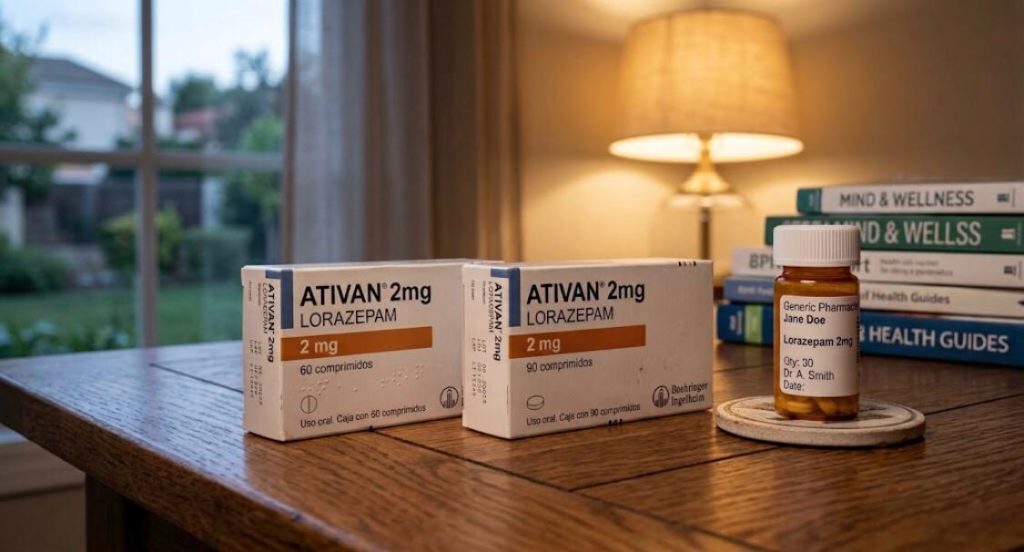
Lorazepam, commonly known by the brand name Ativan, is sometimes used for short-term relief of severe anxiety, panic, or procedure-related distress when a licensed clinician decides the benefits outweigh the risks. In Los Angeles, California, and anywhere else in the U.S., it should be obtained only through a legitimate prescription filled by a state-licensed pharmacy. Because it is a controlled medication, buy Ativan online unverified online sellers, social-media offers, and gray-market websites create real safety risks, including counterfeit tablets, wrong dosing, and dangerous contamination. For patients who are already prescribed lorazepam, the safest path is to use the lowest effective dose for the shortest feasible period, avoid alcohol and opioids, and review a taper or transition plan with the prescriber if the medication is being used more than briefly. If access is difficult, the practical options are to ask the clinician about a prescription generic Ativan, prior authorization, or an accredited local pharmacy not to source the drug from an unverified marketplace.
Lifestyle Changes That Reduce Stress Load
Medication and therapy work better when the body is no longer running on empty.
- Keep a regular sleep and wake time, even on weekends.
- Cut caffeine earlier in the day; many anxious patients do better with a hard afternoon cutoff.
- Move daily, even if it is a brisk 20- to 30-minute walk.
- Reduce alcohol, which often worsens sleep architecture and next day anxiety.
- Use slow exhalation breathing during spikes of autonomic arousal.
- Eat consistently; skipped meals can mimic panic symptoms.
- Limit doomscrolling and repeated body-checking.
- Build one predictable recovery block into the day.
These habits lower baseline arousal so the nervous system is less likely to misfire. They are not a substitute for treatment in moderate or severe anxiety, but they often shorten recovery time and reduce relapse.
FAQ
What is the difference between stress and an anxiety disorder?
Stress is a response to a demand or challenge, while an anxiety disorder is persistent, excessive fear or worry that disrupts daily functioning.
Which treatment works best for generalized anxiety disorder?
CBT and SSRIs are the most common first-line treatments for generalized anxiety disorder, and many patients do best with both.
Can anxiety cause chest pain or stomach symptoms?
Yes, anxiety can cause chest tightness, palpitations, nausea, diarrhea, and abdominal pain through autonomic arousal.
How quickly do SSRIs work for anxiety?
SSRIs usually begin helping within 2 to 6 weeks, although early side effects can appear before the benefit does.
How can I safely access lorazepam in Los Angeles?
You can only obtain lorazepam safely through a licensed prescriber and a state-licensed pharmacy, with careful review of risks, dosage, and follow-up.
Related Post
Nurturing Your Mind: Mental Wellness & Treatment Options
In contemporary healthcare, nurturing mental wellness has evolved from a subjective pursuit of happiness into…
One thought on “Treatment of Anxiety Disorders and Stress ”
Comments are closed.