

Comprehensive Guide to Restoring Hormone Balance
>> Endocrinology>>Hormone Therapy>> Comprehensive Guide to Restoring Hormone Balance
Comprehensive Guide to Restoring Hormone Balance
Understanding the fundamentals of restoring hormone balance is essential for optimizing long term endocrine health and cellular function.” Endocrine physiology represents one of the most intricate homeostatic networks in human biology. Hormones serve as systemic signaling molecules, regulating everything from basal metabolic rate and cellular protein synthesis to neurochemical stability, reproductive longevity, and cardiovascular resilience. When peripheral endocrine output degrades or feedback sensitivity falters, patient health suffers across multiple physiological domains.
Throughout my fifteen years as a practicing clinical endocrinologist, I have witnessed a profound transformation in how we approach endocrine recovery. Historically, biological hormone deficiencies were treated with passive, indefinite hormone replacement strategies. While direct replacement remains vital in severe glandular failure, modern protocols prioritize restoring the body’s natural axis functionality whenever possible. Re establishing endogenous production paths protects metabolic flexibility, preserves receptor sensitivity, and prevents long term feedback axis suppression.
2026 Endocrine Breakthroughs: Modern Principles of Axis Recovery
The landscape of clinical endocrinology in 2026 emphasizes dynamic neuroendocrine modulation rather than static hormone administration. Emerging molecular insights allow clinicians to identify precise signaling disruptions within the Hypothalamic-Pituitary Gonadal (HPG), Hypothalamic Pituitary Adrenal (HPA), and Hypothalamic Pituitary Thyroid (HPT) pathways.
Understanding the Master Control Loops
Every endocrine pathway relies on tight negative feedback loops managed by the hypothalamus and pituitary gland. When downstream hormone output drops, gonadotropin releasing hormone (GnRH) or thyrotropin releasing hormone (TRH) signals increase to stimulate glandular production. Conversely, excessive circulating hormones suppress central signals, leading to glandular atrophy over time.
Hypothalamic Sensitivity and Signal Amplification
In functional endocrine exhaustion, central hypothalamic receptors often become desensitized due to chronic systemic inflammation, elevated cortisol, or previous exposure to exogenous hormones. Re sensitizing these receptor sites is a primary clinical target in modern axis restoration. In addition to hormonal balance, understanding overall medication protocols is crucial; learn more in our detailed overview of understanding antibiotics and indications. A key factor in restoring hormone balance involves reducing chronic systemic inflammation.
Many patients struggling with endocrine exhaustion prioritize restoring hormone balance through targeted therapies.
Understanding receptor sensitivity is crucial for restoring hormone balance effectively.
By supporting natural pathways, achieving and restoring hormone balance becomes more manageable.
Pathophysiology of Endocrine Dysfunction
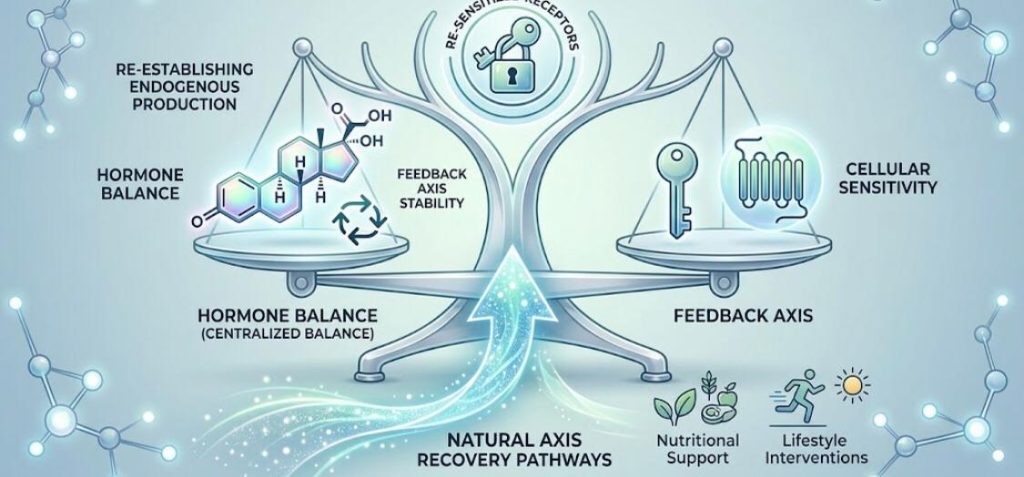
Functional endocrine decline rarely manifests isolated to a single organ. Clinical evaluation must differentiate between primary glandular failure (intrinsic tissue damage) and secondary central axis suppression (pituitary/hypothalamic dysfunction).
Primary vs. Secondary Glandular Exhaustion
In primary failure, target glands (such as the testes, ovaries, or thyroid) cannot produce sufficient hormones despite elevated central trophic signals (LH, FSH, TSH). In secondary failure, target tissues remain structurally intact, but central signaling is muted or absent.
Biomarkers of Axis Desynchronization
Key diagnostic markers include morning total and free steroid fractions, high-sensitivity estradiol, sex hormone binding globulin (SHBG), luteinizing hormone (LH), follicle stimulating hormone (FSH), reverse T3, and ultra sensitive cortisol rhythm testing.
Targeted Pharmacological Protocols and SERM Therapeutics
Targeted therapeutic intervention becomes necessary when physiological feedback loops remain unresponsive to conservative lifestyle modifications. Selective Estrogen Receptor Modulators (SERMs) serve as a cornerstone in secondary axis reactivation by blocking estrogenic negative feedback at the hypothalamus and pituitary.
Therapeutic Applications of Selective Estrogen Receptor Modulators
SERMs act as tissue selective agonists or antagonists. At the level of the arcuate nucleus in the hypothalamus, SERMs occupy estrogen receptors without triggering negative feedback signal cascades. This tricks the central nervous system into perceiving an estrogen deficit, prompting increased pulsatile release of GnRH, which subsequently drives pituitary LH and FSH release.
Selective Estrogen Receptor Modulation with Clomid and Nolvadex
Clomiphene citrate (generic Clomid) and tamoxifen citrate (Nolvadex) remain two of the most thoroughly studied compounds for stimulating endogenous gonadotropin secretion. Clomid acts primarily as a powerful hypothalamic agonist/antagonist mixture, strongly boosting pituitary LH discharge. Nolvadex operates with high binding affinity at pituitary receptor sites, demonstrating significant efficacy in restoring serum gonadotropins while exhibiting a favorable hepatic safety profile.
Clinical Efficacy in Secondary Hypogonadism and Post-Suppression
Clinical trials in 2025 and 2026 confirm that targeted SERM protocols effectively elevate endogenous hormone production in men with functional secondary hypogonadism, post medication axis suppression, or fertility impairment. Typical treatment durations range from 6 to 16 weeks under strict laboratory monitoring.
Dosing Strategies and Estrogen Receptor Saturation
Modern clinical consensus favors lower, micro dosed SERM regimens compared to historical high dose protocols. Micro dosing minimizes receptor down regulation, mitigates mood liability, and avoids visual disturbance risks while maintaining optimal gonadotropin stimulation.
Sourcing Pharmaceutical Grade SERMs: Verification and Patient Safety
For patients prescribed therapeutic protocols involving targeted SERMs, maintaining access to high purity, verified pharmaceutical formulations is paramount. When patients need to purchase Clomid online or secure a supply of medical grade tamoxifen, sourcing through accredited, licensed pharmacies ensures correct ingredient concentration and guarantees freedom from toxic contaminants or counterfeit compounds. In my clinical practice, I routinely warn patients against unverified third party websites offering unauthorized compounds.
Patients seeking to get Nolvadex online or buy Nolvadex secure a supply from reputable channels must insist on verified pharmacy accreditation, legitimate medical prescription validation, and batch tested Certificate of Analysis (CoA) documentation. Order Clomid through certified medical logistics networks guarantees consistent pharmacokinetic absorption and prevents therapeutic failure caused by under dosed or degraded active pharmaceutical ingredients.
Comparing Restoration Strategies: Clinical Efficacy and Long Term Outcomes
Selecting the appropriate intervention requires balancing immediate symptom relief against long-term physiological autonomy. Below is a detailed comparative analysis of modern hormone restoration approaches utilized in 2026 clinical practice.
| Intervention Category | Primary Mechanism | Clinical Advantages | Key Limitations & Risks |
| SERM Therapy (Clomid/Nolvadex) | Blocks hypothalamic estrogen feedback; drives LH/FSH | Preserves testicular volume, maintains fertility, natural pulsatility | Requires intact pituitary response; potential mood fluctuations |
| Direct Replacement (TRT/HRT) | Exogenous hormone administration to restore circulating levels | Rapid symptom relief, predictable serum concentrations | Suppresses endogenous axis; long term dependence; testicular atrophy |
| Aromatase Inhibition (AI) | Blocks conversion of androgens to estrogens | Reduces elevated estradiol; indirectly elevates LH | Risk of bone density loss and lipid disruption if over-suppressed |
| Targeted Lifestyle Restructuring | Reduces neuroinflammation; optimizes substrate availability | Zero side effects; improves overall metabolic and cardiovascular health | Modest impact in severe clinical suppression; requires long compli |
Nutritional, Metabolic, and Restoring hormone balance
Pharmacological therapies provide powerful corrective stimulus, but foundational metabolic health dictates whether restored hormone levels can be sustained long term without ongoing medication.
Micronutrient Architecture for Steroidogenesis
Steroid hormones are synthesized from cholesterol through a multi step enzymatic cascade requiring specific micronutrient cofactors. Deficiencies in key minerals directly impair enzymatic rate limiting steps within steroid producing Leydig cells and adrenal cortex tissue.
Zinc, Magnesium, and Vitamin D3 Signaling
Zinc functions as an essential structural cofactor for 17β-hydroxysteroid dehydrogenase, the key enzyme converting Androstenedione to Testosterone. Magnesium enhances free bioavailable hormone fractions by reducing SHBG binding affinity. Vitamin D3 acts as a nuclear steroid hormone precursor, directly binding to specific promoter regions on steroidogenic gene sequences.
Mitochondrial Support and CoQ10 Integration
The initial conversion of cholesterol to pregnenolone occurs inside the inner mitochondrial membrane via the cytochrome P450 side chain cleavage enzyme (CYP11A1). Mitochondrial targeted antioxidants like CoQ10 and Acetyl L Carnitine optimize mitochondrial membrane potential, facilitating steroid precursor transport.
Impact of Circadian Synchronization and Sleep Architecture
The human endocrine system operates under strict circadian rhythms governed by the suprachiasmatic nucleus (SCN) of the hypothalamus. Disruptions in sleep architecture severely degrade pulsatile pituitary hormone release.
Pulses of Gonadotropins During Slow-Wave Sleep
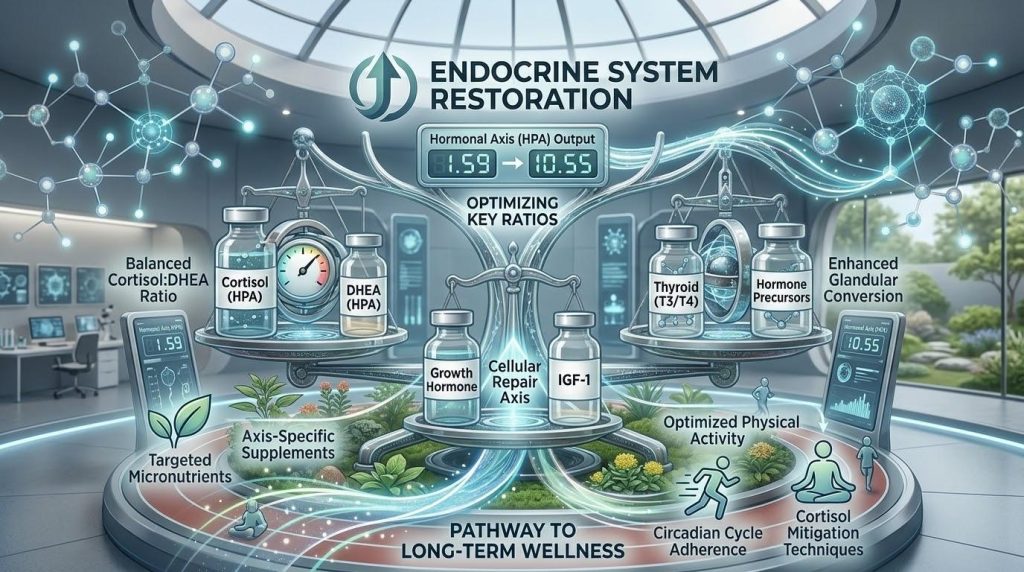
The majority of daily endogenous testosterone release occurs during deep, non-REM slow-wave sleep. Clinical trials demonstrate that limiting sleep to 5 hours per night for just one week reduces daytime steroid levels by 10% to 15% in healthy young adults.
Blue Light Mitigation and Melatonin Pathways
Late-night blue light exposure suppresses pineal melatonin secretion. Melatonin not only regulates sleep cycles but also acts as a powerful direct antioxidant inside gonadal tissue, protecting steroidogenic machinery from oxidative stress.
Mitigating Endocrine Disruptors and Environmental Stressors
Modern human populations are exposed to an unprecedented volume of synthetic chemicals that mimic or interfere with endogenous hormones. Minimizing exposure to Xenobiotics is an indispensable component of clinical axis recovery.
Identified Xenobiotics and Endocrine Disrupting Chemicals (EDCs)
Xenobiotics alter endocrine homeostasis by binding to hormone receptors, altering receptor turnover, or interfering with key metabolic enzymes such as aromatase and 5-alpha reductase.
Phthalates, Bisphenols, and Organophosphates
Bisphenol-A (BPA) and its common substitutes (BPS, BPF) bind to estrogen receptors, triggering weak estrogenic responses while blocking endogenous androgens. Phthalates, widely found in flexible plastics and personal care products, induce Leydig cell apoptosis and reduce steroidogenic acute regulatory (StAR) protein expression.
Detoxification Protocols and Hepatic Cleansing Pathways
Phase I and Phase II hepatic conjugation pathways process and eliminate both endogenous steroid metabolites and environmental xenoestrogens. Supporting hepatic function via Calcium D Glucarate, Diindolylmethane (DIM), and N Acetylcysteine (NAC) accelerates clearance of harmful estrogenic metabolites. Exploring comprehensive strategies for hormone recovery is essential if you want to protect your health forever.
Frequently Asked Questions (FAQ)
Q: How long does it take to restore natural hormone balance after stopping suppressive therapy?
A: Natural hormone recovery typically requires 8 to 16 weeks when using structured SERM protocols combined with targeted metabolic support. Clinical timelines depend heavily on the duration of prior suppression, baseline pituitary health, and patient adherence to lifestyle restructuring.
Q: Can diet and lifestyle changes alone fix severe secondary hypogonadism?
A: Dietary and lifestyle modifications can significantly optimize borderline hormone deficiencies but are often insufficient to resolve severe secondary hypogonadism caused by structural central suppression. In moderate to severe cases, medical protocols utilizing targeted SERMs are necessary to restart central GnRH pulsatility.
Q: What are the primary differences between Clomid and Nolvadex during axis recovery?
A: Clomid exhibits a strong hypothalamic binding pattern that stimulates significant pituitary LH release, whereas Nolvadex acts primarily at the pituitary level with lower rates of emotional side effects and visual disturbances. Both compounds block negative estrogenic feedback to reactivate natural hormone output.
Q: Where can patients safely order Clomid or acquire prescription SERM medications online?
A: Patients can safely acquire prescription SERM medications online exclusively through accredited, licensed telehealth pharmacies that require valid medical prescriptions, offer batch-tested product verification, and comply with strict national regulatory standards. Verifying pharmacy credentials and avoiding uncertified vendors is essential to avoid counterfeit or sub-therapeutic formulations.
Q: What key laboratory tests are required to monitor hormone restoration progress in 2026?
A: Monitoring hormone restoration progress requires comprehensive blood panels assessing total and free testosterone, estradiol (ultra-sensitive LC-MS/MS), LH, FSH, SHBG, prolactin, and full metabolic/lipid profiles. Baseline testing should occur before therapy, with follow-up panels conducted every 4 to 6 weeks during active intervention.
Related Post

What You Need to Know About Teen Male Hypogonadism, According to Testosterone Clinics?
Young boys hit their growth spurt when they reach the age of 14. This is…
One thought on “Comprehensive Guide to Restoring Hormone Balance”
Comments are closed.